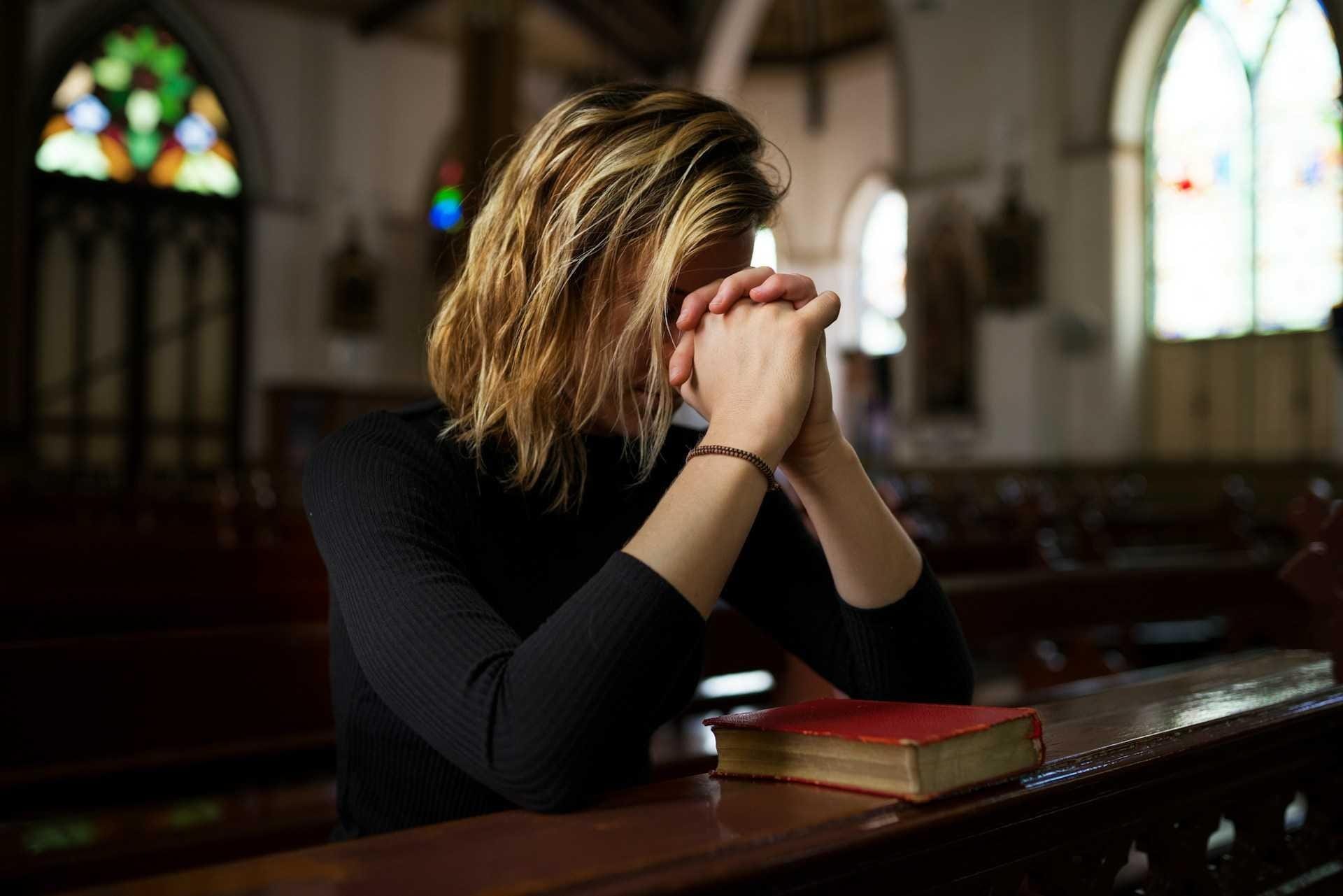

Am I enough? Am I doing enough? These questions can haunt you in your relationships, at work, when you’re out and about, and in the quieter moments during the night. Such questions can hit even harder when they concern your faith. What ought to be a refuge starts to feel like another cage. That is the case when a person struggles with moral OCD or religious scrupulosity.
Your faith is supposed to help you draw nearer to the Lord, and it ought not be a burden or something that makes you feel distant from Him. Even if you struggle with religious scrupulosity, you may not recognize it, which might only add to your distress. It can help to understand what religious scrupulosity is, how it affects you, and how to reconnect with the Lord through a deeper, authentic faith.
Religious Scrupulosity and Moral OCD
Religious scrupulosity may be a new term that you haven’t heard in everyday conversation. However, if you pause and break them down, the meaning starts to become clear. to God or faith. When we say a person is scrupulous, it typically means that they are quite careful and thorough, with an extreme concern to avoid doing something wrong.
Religious scrupulosity, then, is when a person is thorough, careful, and deeply concerned with getting things right when it comes to being moral or fulfilling religious obligations. A person with religious scrupulosity obsesses about moral correctness. They will often experience deep fears and doubts that they are not faithful enough to the Lord, that they are sinning, or that they are failing to meet their religious obligations in some way.
One of the challenges of religious scrupulosity is that the individual feels like a failure despite their best and sincere efforts at practicing their faith. This condition is commonly considered a form of Obsessive Compulsive Disorder (OCD), with the obsessions and compulsions being centered on morality and religion.
How Religious Scrupulosity Is Diagnosed
As a type of OCD, religious scrupulosity is a mental health condition, and it is diagnosable. This condition is not something that’s experienced by all religious people, but it is somewhat common among individuals with OCD. Some research suggests that up to a fifth of the individuals who have OCD may experience moral or religious obsessions and compulsions.
 Religious scrupulosity isn’t a separate diagnosable disorder in the Diagnostic and Statistical Manual of Mental Disorders (Fifth edition) (DSM-5) that’s used by mental health practitioners, but it is a form of OCD. To diagnose OCD, mental health professionals will look for the presence of obsessions. These are intrusive and unwanted thoughts or fears that the individual struggles with.
In addition to these obsessions, another criterion is the presence of compulsions, which are repetitive mental acts or behaviors that the individual performs to try to reduce the distress caused by the obsessions. These obsessions and/or compulsions are time-consuming, and they can be the cause of significant distress. They may also impair a person’s ability to function in daily life.
Lastly, OCD may also be diagnosed when the symptoms aren’t better explained by something like substance use or another mental health condition. Specific obsessions and compulsions are seen with religious scrupulosity.
The Obsessions and Compulsions Associated with Religious Scrupulosity
Serving the Lord is supposed to come with joy. One of the words that often appears in Scripture in connection with serving the Lord is joy. God wants us to have deep, rich joy (John 15:11; Romans 14:17; 2 Corinthians 8:2; Galatians 5:22; Psalm 150). The compulsions and obsessions that accompany religious scrupulosity don’t bring joy, but rather despair, fear, and exhaustion.
Some of the obsessions that are involved with moral OCD or religious scrupulosity include intrusive, persistent, and distressing images, impulses, or thoughts, such as being afraid of sinning without realizing it or unintentionally. They also include:
- Intense anxiety about accidentally offending the Lord or having blasphemous
- Worrying that you’re not pure, faithful, or moral enough to deserve the Lord’s
acceptance and welcome. - Believing that your prayers, religious practices, or spiritual rituals aren’t enough or are invalid.
- Experiencing deep moral doubts about everyday actions, such as unintentionally causing harm or lying by omission.
- Being overly preoccupied with hell, salvation, or eternal punishment.
- Having intrusive thoughts or mental images that feel blasphemous or sacrilegious.
Some of the compulsions and compulsive behaviors that one might engage in repetitively to help relieve the distress caused by these obsessive thoughts would include the following:
- Excessive praying and repeating rituals or prayers until they feel perfect or just right.
- Confession repeatedly and excessively, seeking forgiveness repeatedly for imaginedor minor transgressions.
- Excessive avoidance of objects, situations, or thoughts that could trigger fear of sin.
- Constantly seeking reassurance by asking for it from clergy, spiritual leaders, or loved ones.
- Mentally reviewing past actions to ensure that nothing sinful happened or was done.
- Engaging in moral self-diagnosis to the point of overanalyzing choices to determine if they were perfectly ethical.
- Substituting actions, words, or prayers to counteract intrusive or blasphemous
A person may engage in these compulsive behaviors and thoughts to try to soothe their distress, even when engaging in them tends to reinforce the cycle of anxiety and distress.
The Causes and Impact of Religious Scrupulosity
Where does religious scrupulosity come from? Some of the obsessions and compulsive behaviors just described may sound familiar to you, even though the degree of their intensity isn’t the same. Most believers experience moments when they struggle with worthiness before the Lord. A person of good conscience will meditate on their behavior to consider how to grow and do better.
However, the thing about obsessions and compulsions is that they ramp up the intensity of what one experiences and the distress it causes. Religious scrupulosity can arise from several factors, such as a person’s personality and psychological vulnerability. An individual with high anxiety and perfectionistic tendencies will be more prone to scrupulosity.
 Another factor could be one’s moral or religious upbringing. If there was an emphasis on strict adherence to rules and if transgression brought severe punishment, the fear of condemnation that is generated could result in religious scrupulosity. Religious scrupulosity can arise in any spiritual context, but it does feature more in faiths that are structured with clear doctrines and practices.
Additional factors that can give rise to religious scrupulosity are a biological disposition to OCD through neurological and genetic factors. A person’s brain chemistry can make them more prone to anxiety, for instance. Lastly, existential crises that heighten one’s concerns about guilt and morality, as well as stressful life events, can also give rise to religious scrupulosity.
Regarding how religious scrupulosity affects you, there are several negative effects of this condition. It can make practicing your faith joyless and exhausting, replacing faith with fear. Instead of feeling closer to the Lord, more self-aware, and better able to love others, it impairs you and leaves you feeling isolated, alienated from the Lord, and in despair.
There is such joy in prayer and deep release from confessing your sins. However, these practices can become compulsive and mechanical, losing their meaning. Religious scrupulosity can strain your relationships. As it can consume a lot of your time, it impairs your ability to function in daily life, including your ability to connect meaningfully with other people.
Instead of joy, freedom, and peace, religious scrupulosity leads to ever deeper feelings of shame, guilt, and spiritual despair. Jesus Christ came to give us life (John 10:10) and to give us true freedom in Him (Galatians 5:1). The gospel is Good News because it proclaims freedom for those in bondage (Luke 4:16-21) and freedom from condemnation (Romans 8:1). Religious scrupulosity is the opposite of that.
Finding Rest from Religious Scrupulosity
There is joy and peace to be found in the Lord, and you can gain or regain that so you don’t live your life mired in guilt or fear. The cycle of doubt, fear, obsessions, and compulsions can be broken.
To do this, there are a few effective approaches, and they include:
Mindfulness and self-compassion Learning to observe and experience your thoughts without judgment can be a valuable tool. It can reduce the emotional and spiritual impact of intrusive thoughts, reducing your levels of anxiety. When you can accept that unwanted thoughts aren’t sins and don’t define your faith, that can help promote a more balanced spiritual life. Give yourself the grace the Lord is ready to extend toward you.
Wise guidance Seek spiritual guidance from religious leaders who understand the gospel, religious scrupulosity, and who can provide you with gospel-rooted reassurance that doesn’t fuel your compulsions.
Medication Medications that are prescribed for OCD, such as Selective Serotonin Reuptake Inhibitors (SSRIs), can help to reduce the intensity of obsessions and compulsions.
Cognitive restructuring You can learn to challenge irrational and untrue beliefs about sin, God’s acceptance, or divine punishment.
Seek help There are support groups for people struggling with OCD and religious
scrupulosity. These can help to break the illusion of isolation, and they are places where you can find support and relearn how to approach spiritual disciplines such as prayer or worship in a healthy way.
With professional help, such as that of a trained and licensed therapist, you can benefit from stress management and various therapies that can help you face your fears without needing to perform your compulsions. Cognitive Behavioral Therapy (CBT), especially Exposure and Response Prevention (ERP), can be a huge help as you face triggers and deal with them in a healthy way.
You can find deep rest today in Christ. Contact Joseph Bennett to get started toward freedom.
“Wooden Bridge”, Courtesy of Deanna Lewis, Unsplash.com, CC0 License; “Starry Sky”, Courtesy of Leonardo Corral, Unsplash.com, CC0 License
 Joseph Bennett: Author
I have been counseling for over 25 years in various backgrounds and cultures. I offer professional Christian counseling for couples, individuals, and families facing a variety of concerns, including anxiety, addiction, codependency and other relation...

DISCLAIMER: THIS ARTICLE DOES NOT PROVIDE MEDICAL ADVICE
Articles are intended for informational purposes only and do not constitute medical advice; the content is not intended to be a substitute for professional medical advice, diagnosis, or treatment. All opinions expressed by authors and quoted sources are their own and do not necessarily reflect the opinions of the editors, publishers or editorial boards of Stone Oak Christian Counseling. This website does not recommend or endorse any specific tests, physicians, products, procedures, opinions, or other information that may be mentioned on the Site. Reliance on any information provided by this website is solely at your own risk.