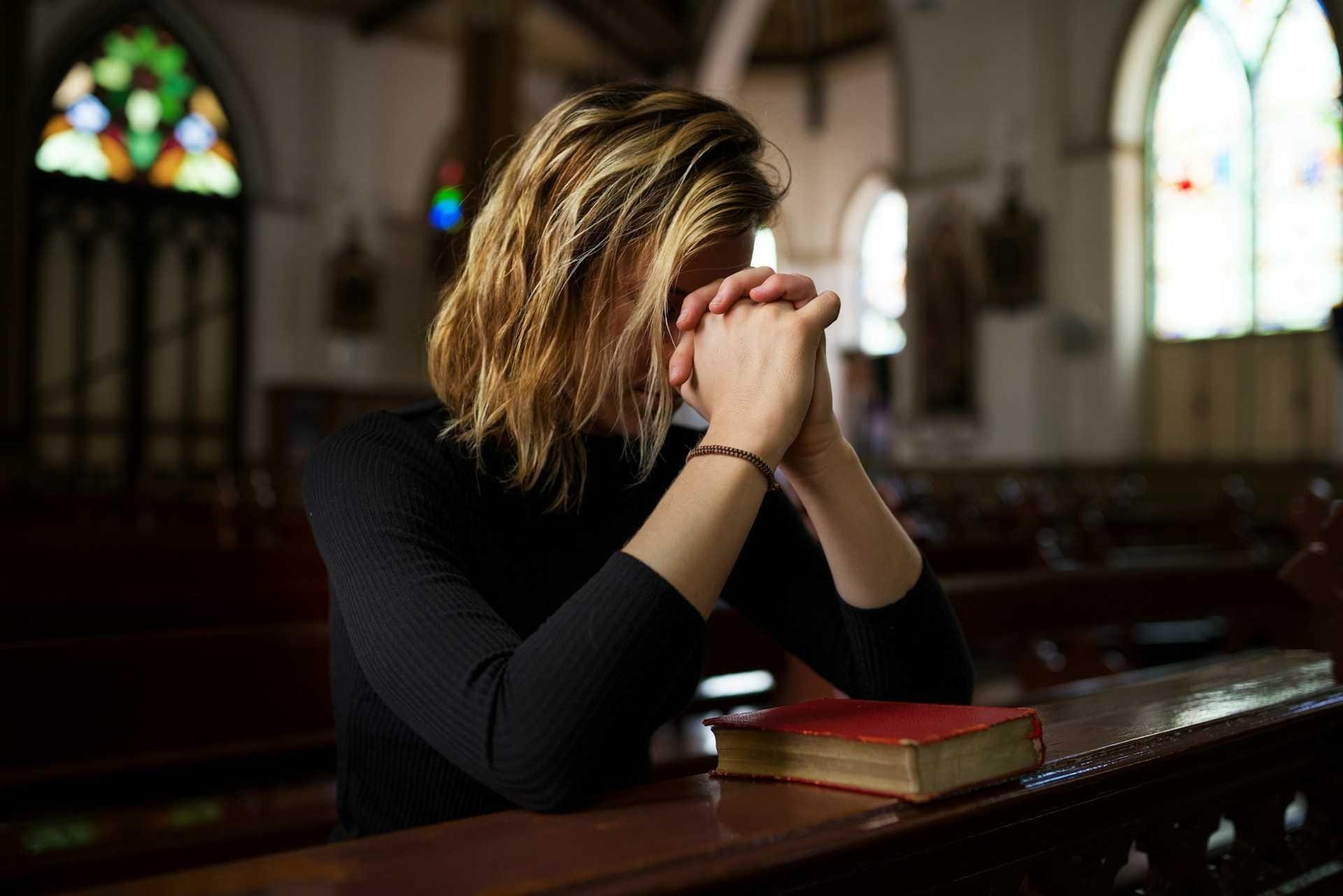

For many of us, faith is meant to be a source of peace and direction. But what happens when that same faith becomes a source of relentless anxiety? What do we do when every thought feels like it needs to be confessed, and every decision requires certainty that never comes? How do we recognize the line between conviction and compulsion when it blurs beyond recognition?
This is a reality called moral OCD. It is a form of Obsessive Compulsive Disorder that affects our deepest values and turns them into a battlefield. As Christians, it can mean that our beliefs, meant to bring freedom, have changed with every prayer and every Scripture reading. With every attempt to do what’s right, we find ourselves battling an anxiety that we are just now understanding.
Moral OCD isn’t about being overly religious or having a sensitive conscience. It is when normal spiritual concern crosses into the territory where the mind becomes stuck in loops of fear and doubt. The first step toward finding healing for moral OCD is to recognize when a mental health disorder has hijacked our faith.
The Nature of Moral OCD
Moral OCD, sometimes called scrupulosity, is a subset of an Obsessive Compulsive Disorder that centers on fear about morality, ethics, and personal integrity. Instead of focusing on contamination or order, moral OCD targets our core values and beliefs.
This means it often manifests as overwhelming anxiety about sin, salvation, or offending God. We may experience intrusive thoughts that feel morally reprehensible and engage in a mental or behavioral compulsion to neutralize the anxiety that those thoughts create.
Intrusive thoughts are not reflections of character or desires. They are unwanted, distressing mental events the brain produces. This is where OCD latches onto them and demands certainty that we are still morally acceptable.
Those who suffer from moral OCD may replay conversations endlessly to ensure they didn’t lie, confess the same perceived sin repeatedly, or avoid situations where they may be tempted to think wrong thoughts. The compulsions will give temporary relief, but they also reinforce the cycle and teach the brain that these thoughts are genuinely dangerous and must be neutralized.
Moral OCD isn’t based on how devoted someone is to their faith, but it does exploit whatever a person values most. For Christians, that means moral OCD can transform genuine faith into a source of daily torment.
How Moral OCD Distorts Christian Behavior
Normal Christian practices become distorted when moral OCD takes hold. Prayer becomes a compulsion rather than a communion, and people repeat phrases until they feel right or confess the same fears over and over. Reading Scripture turns into a search for reassurance rather than an encounter with God’s character. Worship is driven by fear of punishment rather than love and gratitude. All of these behaviors look like devotion on the outside, but underneath, they are fueled by anxiety and the impossible pursuit of certainty.
This disorder affects relationships within Christian communities. The struggle with moral OCD can cause people to excessively seek reassurance from pastors, small group leaders, or friends. They repeatedly ask if a particular thought or action was sinful.
 Sometimes they avoid serving and ministry out of fear that they will do something wrong, or they might overcommit to prove their faithfulness. Moral OCD creates a version of Christianity that is exhausting, isolating, and disconnected from the grace that God’s word proclaims.
Christian counselors recognize that moral OCD is not a spiritual problem that requires more prayer or greater faith. It is a mental health challenge that requires specific treatment approaches. When these two are confused, a person can experience years of unnecessary suffering, believing they are failing spiritually. In reality, they’re dealing with a diagnosable and treatable condition.
Differentiating Conviction and Compulsion, Certainty and Confidence
For a believer struggling with moral OCD, one of the most difficult aspects is distinguishing between the Holy Spirit’s conviction and the disorder’s compulsions. Conviction from God is typically clear and specific, leading to repentance and peace. This will address actual wrongdoing and point toward restoration.
Conviction is born out of communion, a living relationship with God. Consider receiving feedback from a close friend about your outfit. You may not like what your friend says, but the quality of the relationship allows you to receive it with a sense of peace and safety. You trust your friend’s character, judgment, and care for you. By contrast, you might spend the entire day scrutinizing your appearance and repeatedly adjusting your clothes to satisfy an imagined standard. Yet the goalpost continually shifts, and certainty remains out of reach. The first is rooted in a mutual relationship; the second is the mind curving inward upon itself, searching for a certainty it cannot attain.
 Relationships never provide absolute certainty. Instead, they invite confidence in the character of another. You trust that your best friend has your well-being in mind and is not seeking to shame or destroy you. Resting in that confidence, you can move forward with your day without resolving every possible doubt.
In much the same way, moral OCD turns the mind inward in search of absolute moral certainty, whereas genuine faith and conviction grow from reaching outward toward God through God’s Word, God’s Spirit, and God’s people. One traps the person in endless self-examination and leaves them frozen; the other makes room for faithful participation in life, even while uncertainty remains.When people face conviction, it bears the fruit of humility and growth, deepening our relationship with God. Compulsion produces fear and isolation, a sense of unworthiness. Conviction invites us to bring our failures to God and receive forgiveness. But compulsion tells us that we can never be sure we’ve confessed enough, believed enough, or done enough to be acceptable.
This is a vital difference because treating OCD compulsions as if they were a spiritual conviction only strengthens the disorder. Christian counselors understand that both OCD and faith can help individuals learn to recognize these patterns.
Therapy for OCD cannot remove uncertainty by helping clients “figure things out” internally. No amount of analyzing thoughts, feelings, or intentions will produce absolute certainty. Instead, healing comes from helping clients face uncertainty and still act, such as choosing not to check, not to ruminate, or to move forward with life despite doubt. This is the underlying principle of many approaches in treating OCD including Exposure and Response Prevention (ERP).
Scripture reminds us that faith is not about certainty:
By faith Abraham, when called to go to a place he would later receive as his inheritance, obeyed and went, even though he did not know where he was going. – Hebrews 11:8, NIV
The man whom the apostle Paul called the “father of faith” (Galatians 3:6) did not know where he was going. His pilgrimage was sustained not by certainty, but by a relationship with Almighty God; a relationship in which he learned, slowly and often painfully, to trust. Abraham’s record was far from flawless. His efforts to manufacture security led to much suffering, like fathering Ishmael and twice placing Sarah at risk to protect himself. Yet through these failures, Abraham gradually learned to loosen his grip on control. His journey culminated in the ultimate confrontation with uncertainty: surrendering Isaac to God without knowing how God could possibly fulfill His promise. At that moment, Abraham possessed no certainty about what God would do; he had only a confidence in who God was, a confidence forged through decades of struggle with the goodness and faithfulness of God.
Finding Freedom Through Faith-Informed Treatment
You don’t need to abandon your faith to heal from moral OCD. On the contrary, if moral OCD is a turning inward of the soul to seek certainty, then faith, properly defined and practiced, is precisely the antidote. Finding a Christian counselor who specializes in OCD will help you understand how to honor your beliefs while addressing the disorder with evidence-based treatment.
This type of approach often includes learning to “turn outward” by being present in the moment and tolerating uncertainty, trusting that God’s love isn’t dependent on achieving perfect certainty about every thought and action.
Consistent with the goal of “turning outward”, community support is important for those who struggle with moral OCD. If a church community understands the struggle, it can respond with compassion rather than judgment. They will learn to recognize that someone seeking constant assurance isn’t lacking faith, but they are dealing with a disorder that requires professional help. These communities can also help by creating environments for mental health treatment is seen as compatible with spiritual growth and not a sign of weakness or insufficient belief.
There Is Hope
Living with moral OCD as a Christian can feel like being trapped between two worlds. You want to follow God faithfully, yet you’re tormented by a disorder that goes against that very desire. There is hope for healing, but it requires that moral OCD be recognized for what it is: a treatable mental health condition.
 People can find freedom without abandoning their faith as they learn to distinguish between the voice of fear and the voice of God. Compulsions do not have to override the way they engage in their faith as they discover that the God they have been so afraid of disappointing is the God who says his grace is sufficient.
Moral OCD does not define your faith, and it does not disqualify you from experiencing the fullness of life in Christ. The right support, community, and therapy can open the door to healing. It may be challenging to navigate understanding conviction and compulsion, but it will lead to a faith rooted in grace, not fear.
If you or someone you love is struggling with moral OCD, feel free to contact our office or complete an online contact form. Understanding moral OCD and navigating the journey to healing don’t have to be done alone. Christian counselors are within reach and can help you as you navigate this mental health challenge. Call to learn more.
Photos:
“Book pages,” courtesy of Priscilla Du Preez 🇨🇦, Unsplash.com, CCO License
“Woman by window,” courtesy of Kelly Sikkema, Unsplash.com, CCO License
“Open book,” courtesy of Aaron Burden, Unsplash.com, CCO License
 Dr. Huy Lam: Author
Past clients have shared that the most transformative part of our work together has been developing the ability to recognize in real time the ingrained patterns of behaving that have been undermining every area of their lives, and learning the practi...

- Kate Motaung: Curator
DISCLAIMER: THIS ARTICLE DOES NOT PROVIDE MEDICAL ADVICE
Articles are intended for informational purposes only and do not constitute medical advice; the content is not intended to be a substitute for professional medical advice, diagnosis, or treatment. All opinions expressed by authors and quoted sources are their own and do not necessarily reflect the opinions of the editors, publishers or editorial boards of Stone Oak Christian Counseling. This website does not recommend or endorse any specific tests, physicians, products, procedures, opinions, or other information that may be mentioned on the Site. Reliance on any information provided by this website is solely at your own risk.